Easy Knitted Scarves
One Skein Scarf: An Easy Knit That Uses the Whole Ball
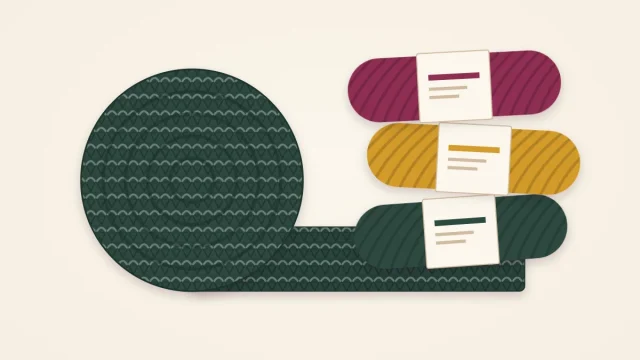
How to plan a scarf around a single skein: read the yardage, pick a width that leaves a wearable length, knit until the yarn is nearly gone and keep enough to bind off.
Simple knitted scarves, beautiful results
Beginner-friendly scarf tutorials with clear stitch counts, honest yarn and needle advice, and the finishing steps that make a handmade scarf look polished.
Never knitted a scarf before? Work through these four guides in order.
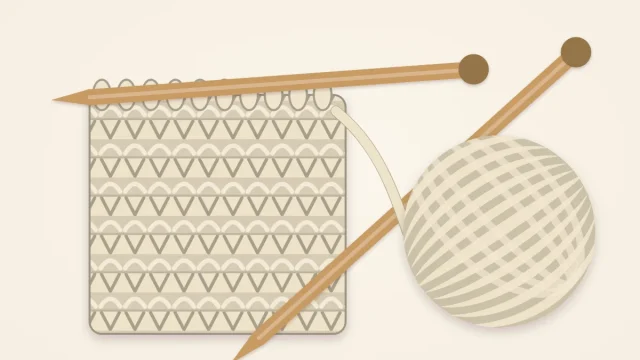
A complete first scarf in garter stitch: what to buy, how many stitches to cast on, the knit stitch step by step, keeping count, binding off and weaving in the ends.
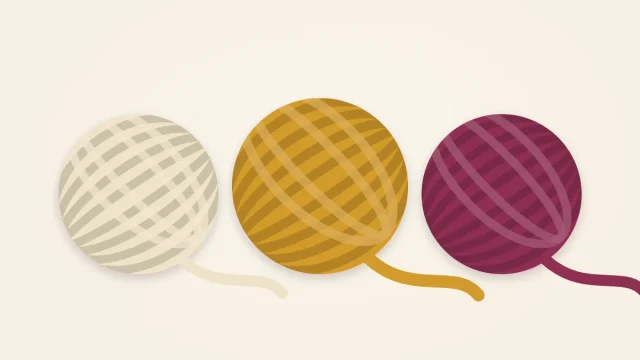
How to choose scarf yarn by fiber, weight, softness against the neck, washability and color, with a simple default for a first scarf.
Needle size for a scarf depends on the yarn weight. Here are the typical ranges, when to go up a size for drape, and how to choose between straight and circular needles.
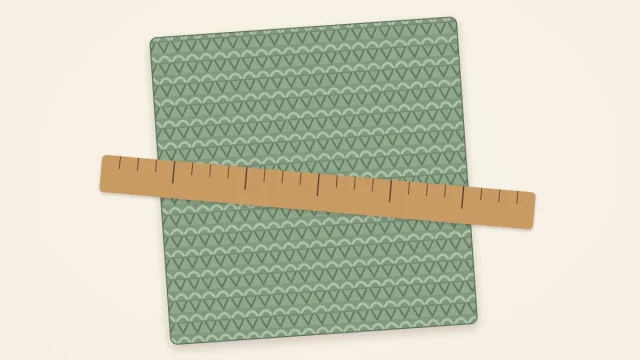
Typical scarf widths and lengths for children and adults, the height rule of thumb, and how to work out a cast-on number for the width you want.
How to plan a scarf around a single skein: read the yardage, pick a width that leaves a wearable length, knit until the yarn is nearly gone and keep enough to bind off.
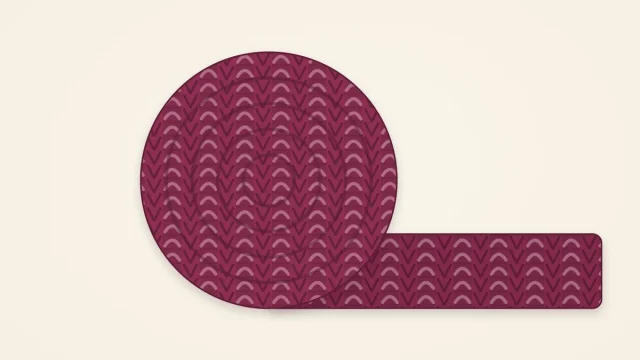
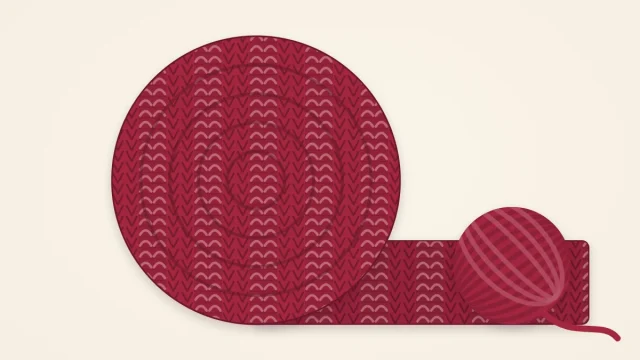
Stockinette stitch rolls at the edges because of how the stitch is built. Here is why it happens and the fixes that work: flat stitches, borders, tubes and the limits of blocking.
A classic garter stitch scarf on 28 stitches in worsted yarn, with a slipped edge option, a cast-on table for other widths and a simple way to count ridges.
A 2x2 ribbed scarf on 42 stitches of worsted-weight yarn, with a stitch count that makes both edges match and a bind-off that keeps the ends stretchy.
A three-color striped garter scarf on 32 stitches, with clear steps for changing color on a right-side row and deciding when to carry the yarn up the side or cut it.
A basketweave scarf made from 4-stitch, 4-row blocks of knit and purl on 36 stitches, with all 8 rows written out and tips for keeping your place.
A scarf shows both faces of the fabric and has free-hanging edges, so the stitch matters. Here are the traditional stitches that lie flat, with the stitch count each one needs.
A seed stitch scarf worked over 31 stitches, so every row is the same: k1, then p1, k1 to the end. Includes how to read your stitches, move the yarn and keep the tension even.
US seed stitch swaps knits and purls on every row; US moss stitch swaps them every second row. UK patterns use "moss stitch" for the first one. Here is how to tell them apart and choose.
A 14-stitch garter scarf in super bulky yarn on US 15 (10 mm) needles, with the arithmetic that shows why it has about one-fifth of the stitches of a worsted scarf.
A 1x1 ribbed scarf for bulky or super bulky yarn, worked over an odd number of stitches so both edges match. Includes cast-on numbers, yardage estimates and ways to keep thick rib soft.
How bulky, super bulky and jumbo yarns differ, what single-ply, plied and chainette strands mean for wear, and how fiber affects the weight of a scarf around your neck.
When a gauge swatch is worth knitting for a scarf, how to knit and measure it, and how to turn stitches per inch into a cast-on number.
Typical yardage for a knitted scarf by yarn weight, why ribbed and textured stitches need more, and how to weigh a swatch for a closer estimate.
Loose side edges come from the first stitch of each row. A slipped-stitch selvedge, steadier tension on the first two stitches and garter borders keep a scarf's sides straight.
A warm scarf depends on three things: a fiber that insulates, a thick fabric that traps air, and enough width and length to wrap twice. Here is how to plan each one.
An airy garter scarf for spring and fall, knit in DK-weight cotton, linen or a wool blend on US 8 (5 mm) needles. Cast on 36 stitches for a scarf about 8 x 64 in.
Both sides of a scarf show, so yarn tails have to follow the stitches and change direction to stay hidden. Leave at least 6 in (15 cm) and trim only after blocking.
Fringe is cut strands knotted through the ends of a finished scarf. Work out the yarn first: 12 three-strand tassels per end with a 5 in fringe take about 22 yd.
Blocking straightens the edges and evens out the stitches of a finished scarf. The right method depends on the fiber: wet blocking for wool, light hovering steam at most for acrylic.
Typical infinity scarf circumferences for a single loop, double wrap and triple wrap, the widths that suit each, and how to measure with a string before you knit.
Pick a yarn you like, learn one stitch, and keep going until it is long enough. Every tutorial on the site is free to read, no sign-up needed.