Super Bulky Yarn for Scarves: How to Choose Bulky, Super Bulky and Jumbo
How bulky, super bulky and jumbo yarns differ, what single-ply, plied and chainette strands mean for wear, and how fiber affects the weight of a scarf around your neck.
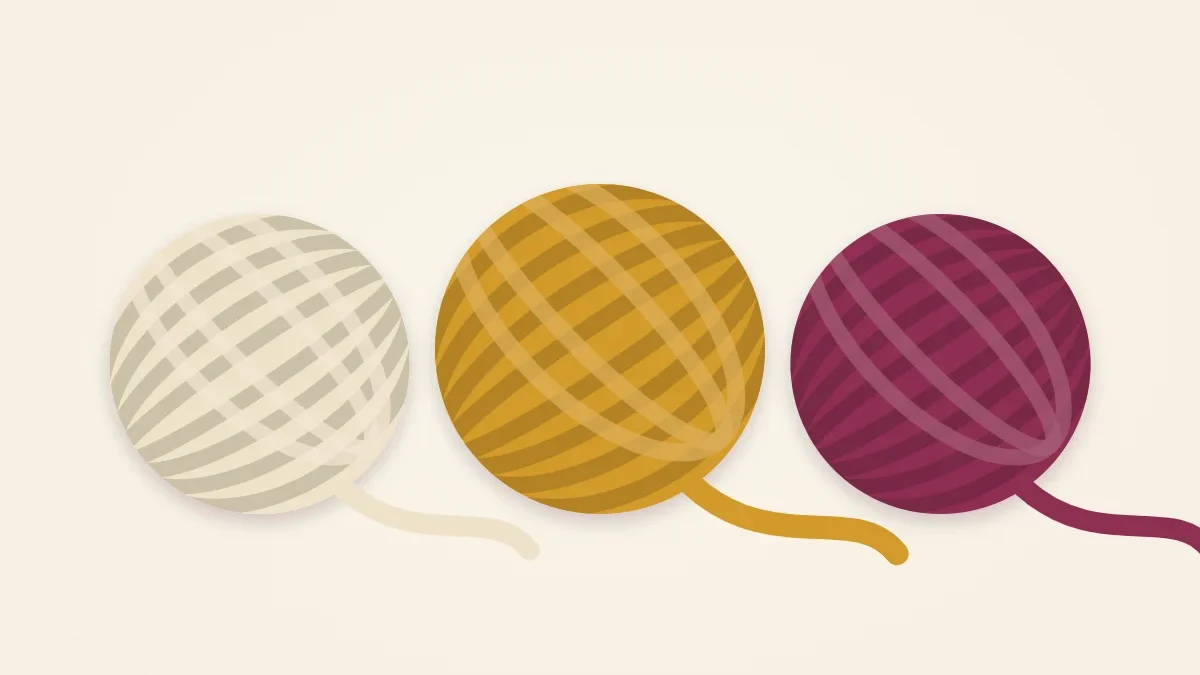
Thick yarn is sold under three different weight numbers, and the gap between them is wider than the labels suggest. A bulky scarf and a jumbo scarf are different objects: one drapes like ordinary knitwear, the other sits on the shoulders like a collar. Before you buy, it helps to know which weight you are holding, how the strand is built and what the fiber will feel like after a winter of wear.
Bulky, super bulky and jumbo: how they differ
The Craft Yarn Council weight system numbers yarn from thin to thick. The three thickest categories are the ones sold as “chunky”.
| Weight | Typical needles | Fabric in a scarf | Rough yardage for a 7 x 65 in garter scarf |
|---|---|---|---|
| Bulky (#5) | US 9-11 (5.5-8 mm) | Thick but still flexible; shows stitch patterns well | About 180-250 yd (165-230 m) |
| Super bulky (#6) | US 11-17 (8-12.75 mm) | Very thick, big visible stitches, fast to knit | About 120-180 yd (110-165 m) |
| Jumbo (#7) | US 17 and larger (12.75 mm+) | Oversized stitches; a statement piece more than an everyday scarf | Varies widely; check the label and swatch |
The yardage falls as the yarn gets thicker because each stitch covers more area, but the weight of the finished scarf goes the other way. Fewer yards of a much heavier strand still add up to a heavier scarf.
For a first thick scarf, bulky or the lighter end of super bulky is the comfortable range. The stitches are large enough to see clearly and the needles are still easy to hold. Jumbo yarn on very large needles can feel clumsy until your hands adjust, and a mistake in a jumbo stitch is hard to hide.
How the strand is built
Two yarns of the same weight and fiber can behave very differently depending on construction. Untwist the end of the strand and look at it; most thick yarns fall into one of three types.
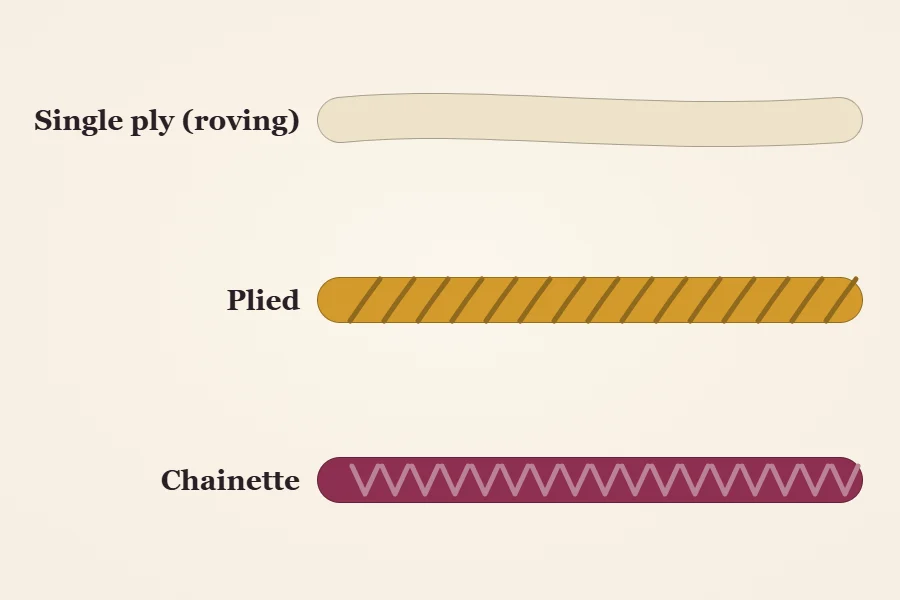
Single ply (roving style)
One thick strand of fiber with a light twist, or almost none. It feels soft and airy in the ball and gives a smooth, rounded stitch. The trade-off is durability: with so little twist holding the fibers in, the surface fuzzes and pills where it rubs, and the strand can drift apart if you pull hard on it. Needle tips also split it easily. It suits a scarf you will wear gently, less so one that lives under a backpack strap.
Plied
Two or more thinner strands twisted together. The twist locks the fibers in place, so plied yarn resists pilling better, holds its shape and gives crisp stitch definition. This is the safer choice for rib and textured stitches, and for any scarf that will get daily use. It usually feels a little firmer in the ball than a single ply of the same fiber.
Chainette or tube
A fine yarn knitted into a narrow tube or chain, a little like a cord. Because the strand is mostly air, it is thick without being heavy, which matters around the neck. Chainette yarns are springy, do not split in the usual way and tend to pill less than roving. They can snag on rough needle tips or jewelry, and the tails need careful weaving because the tube is slippery.
| Construction | Feel | Wear | Good for |
|---|---|---|---|
| Single ply | Softest, lofty | Pills and fuzzes soonest | Simple garter scarves worn gently |
| Plied | Round, slightly firmer | Durable, keeps stitch definition | Rib, texture, everyday scarves |
| Chainette | Light, springy | Low pilling, can snag | Wide or long scarves where weight matters |
Fiber and weight around the neck
A full-length scarf in super bulky yarn can weigh several times as much as the same scarf in worsted. Check the grams on the labels and add them up before you commit: that total is what will hang from your neck.
- Wool: warm, elastic and forgiving to knit. In thick yarns the fiber quality is easy to feel, so hold the ball against your neck or inner wrist for a minute before buying. Non-superwash wool can felt if machine washed.
- Superwash wool: machine washable, smooth and often heavier in the hand. It can stretch when wet, so dry it flat.
- Acrylic: light for its bulk, inexpensive and washable. It does not hold a wet block and must never be pressed with an iron.
- Wool and acrylic blends: a practical middle ground: some of wool’s warmth and spring, with less weight and easier care.
- Alpaca and alpaca blends: very warm and soft, but dense and with little elasticity. A thick alpaca scarf tends to grow longer as it is worn.
- Cotton: heavy and inelastic at this thickness; rarely a good match for a chunky winter scarf.
The general guide to yarn for scarves goes through each fiber in more detail, including washability and how color affects stitch visibility.
Pilling: what to expect
Pills form when loose fiber ends work their way to the surface and tangle. Thick, low-twist yarns have more loose fiber near the surface, so they pill faster than tightly plied ones. You can reduce it, not eliminate it.
- Choose a plied or chainette construction if the scarf will get heavy use.
- Knit a firm enough fabric. Very loose stitches let the fibers move and rub.
- Remove pills with a sweater comb or by snipping them off. Pulling them drags more fiber out.
- Wash by hand or on a gentle cycle only if the label allows, and dry flat.
Tip
Rub two strands of the yarn together between your fingers about twenty times. If a halo of fuzz appears straight away, expect the scarf to pill in the same way.
Needles and fabric
The ranges in the table are wide on purpose. For a scarf, going up one or two needle sizes from the label recommendation gives a softer, drapier fabric, and that matters more in thick yarn than in thin: a dense super bulky fabric is stiff and heavy. Knit a few inches and fold the fabric over your hand. It should bend easily. The needle size guide has the full chart by yarn weight.
Very large needles are heavy in their own right. Wood or bamboo grips slippery yarn better than metal, and a circular needle used flat lets the scarf rest in your lap as it grows.
Buying checklist
- Read the yardage, not only the grams. Thick skeins are often short, sometimes well under 100 yd.
- Buy every skein you need at once and check that the dye lot numbers match.
- Add one skein if you plan rib or another textured stitch, which use more yarn than garter.
- Pick a solid or gently heathered color if you want the stitches to show.
- Check the care instructions against who will be wearing it.
With yarn chosen, the chunky garter scarf is the quickest way to use it, and the chunky ribbed scarf shows what a plied strand can do in 1×1 rib.
Frequently asked questions
Is super bulky yarn good for a first scarf?
It can be. The stitches are large and easy to see and the scarf grows quickly, but the needles are big and can feel awkward at first. Bulky or the lighter end of super bulky is the easiest thick yarn to handle.
Why does my chunky scarf pill so much?
Thick yarns with little twist, especially single-ply roving styles, have loose fibers near the surface that rub into pills. A plied or chainette yarn and a slightly firmer fabric pill less.
What is the difference between bulky and super bulky yarn?
Bulky is weight #5 and is usually knit on US 9-11 (5.5-8 mm) needles. Super bulky is weight #6, noticeably thicker, and is usually knit on US 11-17 (8-12.75 mm) needles.