What Needle Size for a Scarf? A Guide by Yarn Weight
Needle size for a scarf depends on the yarn weight. Here are the typical ranges, when to go up a size for drape, and how to choose between straight and circular needles.
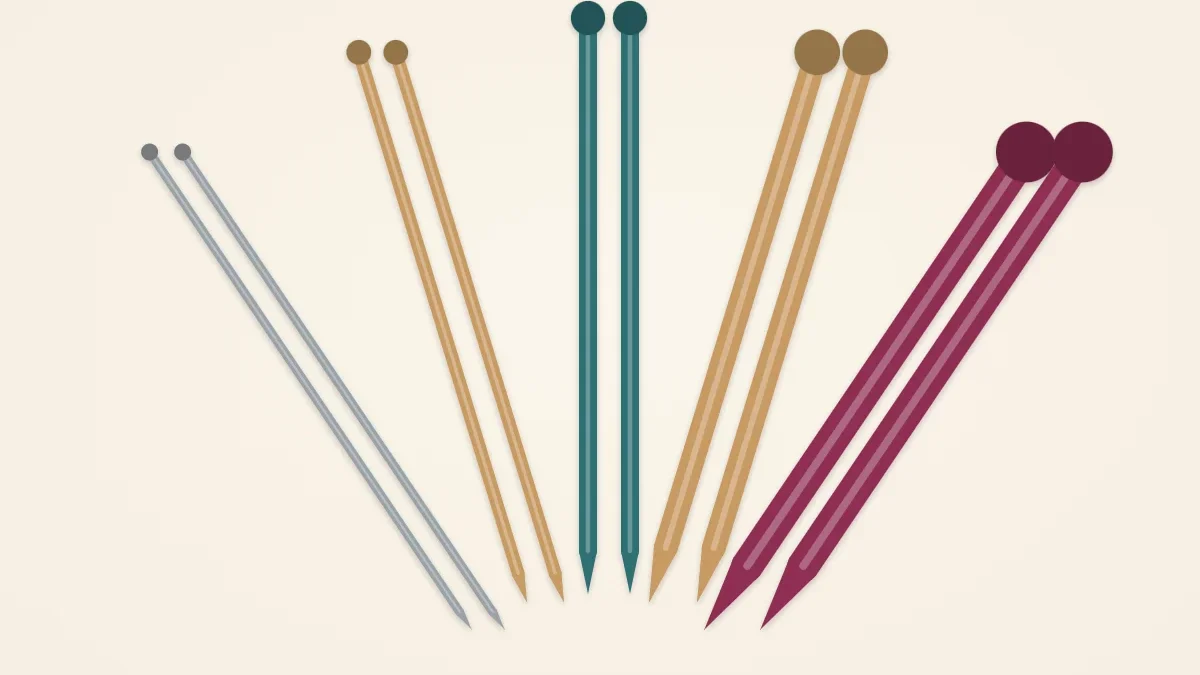
Needle size for a scarf follows the yarn, not the other way around. Each yarn weight has a range of needle sizes that produce a sensible fabric, and for scarves the useful end of that range is the larger one, because a scarf should bend and drape around a neck instead of standing up like a placemat. For a first scarf in worsted-weight (#4) yarn, that means US 8 (5 mm).
Needle sizes by yarn weight
The table shows the typical needle range for the yarn weights most often used for scarves, together with a good starting size for a scarf. The ranges follow the Craft Yarn Council standards; the starting sizes sit in the middle or upper part of each range on purpose.
| Yarn weight | Typical needle range | Good starting size for a scarf |
|---|---|---|
| DK (#3) | US 5-7 (3.75-4.5 mm) | US 7 (4.5 mm) |
| Worsted (#4) | US 7-9 (4.5-5.5 mm) | US 8 (5 mm) |
| Bulky (#5) | US 9-11 (5.5-8 mm) | US 10.5 (6.5 mm) |
| Super bulky (#6) | US 11-17 (8-12.75 mm) | US 13 (9 mm) |
| Jumbo (#7) | US 17 and larger (12.75 mm and up) | US 19 (15 mm) |
Treat these as starting points. Your own tension matters as much as the number stamped on the needle: a tight knitter and a loose knitter using the same yarn and the same needles will make two different fabrics. If you have not chosen a yarn yet, start with the guide to the best yarn for scarves and come back for the needles.
What the size number means
Needle size is the diameter of the shaft, the part the stitches sit on while you knit. That diameter sets the size of every loop. A US size is only a label; the metric measurement in millimeters is the real dimension, so when the two seem to disagree, trust the millimeters. Some US sizes are also spread far apart at the thick end: US 10.5 is 6.5 mm and US 11 is 8 mm, with nothing named in between.
The yarn label prints a suggested needle size, usually next to a small grid showing how many stitches fit in 4 in (10 cm). That suggestion is aimed at a general-purpose fabric, often for sweaters, which need to be a little firmer than scarves do.
Going up a size for drape
For scarves, going up one or two needle sizes from the label gives a softer, drapier fabric. Larger needles make larger loops, so the same strand of yarn has more room to move. With worsted yarn whose label suggests US 8 (5 mm), one size up is US 9 (5.5 mm) and two sizes up is US 10 (6 mm).
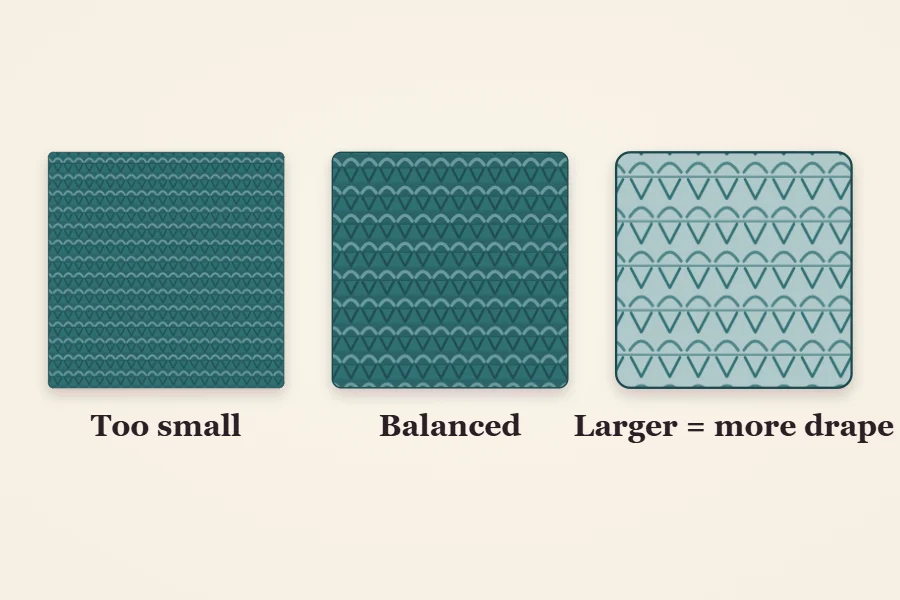
Each direction has a cost, so the choice is a trade:
- Too small: dense, stiff fabric that is warm but does not wrap well. Stitches are hard to push along the needle and your hands tire sooner.
- Balanced: the stitches fill the space without crowding. The fabric holds its shape and still bends easily.
- Larger: open, fluid fabric with good drape. Go too far and the stitches look uneven, the scarf snags more easily and it stretches lengthwise as it is worn.
Stitch pattern changes the answer. Garter stitch is thick and springy, so it handles a larger needle well. Ribbing already pulls in and feels dense, so it benefits from going up a size if it seems stiff. Thin yarn knit on needles well above its range gives an airy fabric on purpose, which is the idea behind a lightweight spring scarf.
Tip
Knit a few inches, then drape the fabric over your hand. If it stands out stiffly, go up a size. If you can clearly see daylight through plain garter stitch in a winter scarf, go down one.
Straight or circular needles
A scarf is knit flat, back and forth in rows, and both needle types do that job.
Straight needles
Straight needles are two separate rods with a stopper at one end. They are simple, inexpensive and easy to understand, which is why most first scarves are made on them. The usual lengths are 10 in (25 cm) and 14 in (35 cm). A scarf is narrow, so the 10 in length is enough for almost any width and is lighter and less awkward on a sofa or a bus seat.
Circular needles used flat
Circular needles are two short tips joined by a flexible cable. You can knit flat on them exactly as you would on straights: work across the row, turn the work, and work back. You simply never join the stitches into a round. The advantages show up with heavy projects. The weight of the scarf rests on the cable in your lap instead of hanging off the end of a long needle, which is easier on the wrists, and the stitches cannot slide off the back end. A cable of 24 in (60 cm) is comfortable for scarf widths.
For a wide wrap or a chunky scarf in super bulky yarn, circular needles are noticeably more comfortable. For a standard worsted scarf, use whichever you already own.
Wood, bamboo, metal or plastic
The material changes how easily stitches slide, and that matters more to a beginner than it seems.
- Wood and bamboo have a slight grip. Stitches stay where you put them, so they are the most forgiving choice while you are learning and with slippery yarns such as superwash wool.
- Metal is slick and fast, with sharper tips. It suits experienced hands and grippy yarns, but stitches can escape if you put the work down carelessly.
- Plastic is light and warm to the touch, which is why many very large needles for super bulky and jumbo yarn are made from it. The grip sits between wood and metal.
Tip shape matters too. Blunter tips split the yarn less; pointier tips make it easier to get into tight stitches. For plain garter stitch in a smooth yarn, either works.
How to check your choice
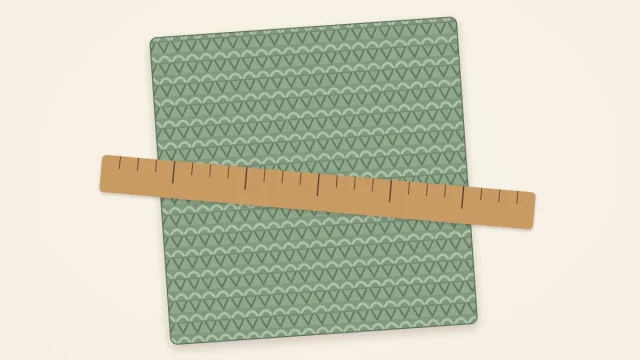
You do not need to commit to a needle size by guesswork. Cast on enough stitches for about 6 in (15 cm), knit a few inches in the stitch pattern you plan to use, and look at the fabric. A gauge swatch for a scarf does double duty here: it tells you whether you like the fabric and gives you the stitches-per-inch number you need to work out how many stitches to cast on.
If the fabric is wrong, change only the needle size and try again. Trying to knit more loosely or more tightly on purpose rarely lasts beyond a few rows; your hands go back to their normal tension. Once the swatch feels right, the beginner scarf walkthrough takes you from cast-on to bind-off.
Frequently asked questions
What size needles should I use for a worsted-weight scarf?
US 8 (5 mm) is the standard starting size for worsted-weight (#4) yarn. Go up to US 9 (5.5 mm) if the fabric feels stiff, or down to US 7 (4.5 mm) if it looks loose and uneven.
Can I knit a scarf on circular needles?
Yes. Knit back and forth in rows and turn the work at the end of each row, exactly as on straight needles, without joining into a round. The cable carries the weight of the scarf, which is easier on your wrists.
Are wooden or metal needles better for beginners?
Wood or bamboo is usually easier at first because the surface grips the yarn slightly and stitches are less likely to slide off. Metal is faster once your hands are confident.