Best Yarn for Scarves: Fiber, Weight, Softness and Color
How to choose scarf yarn by fiber, weight, softness against the neck, washability and color, with a simple default for a first scarf.
A scarf sits directly against your neck and chin, gets pulled on and off all winter, and shows both of its sides. Those three facts decide most of the yarn choice: it has to feel comfortable on bare skin, survive the care you are realistically going to give it, and show your stitches clearly enough that you can see what you are doing. Price and color come after that.
The short answer for a first scarf
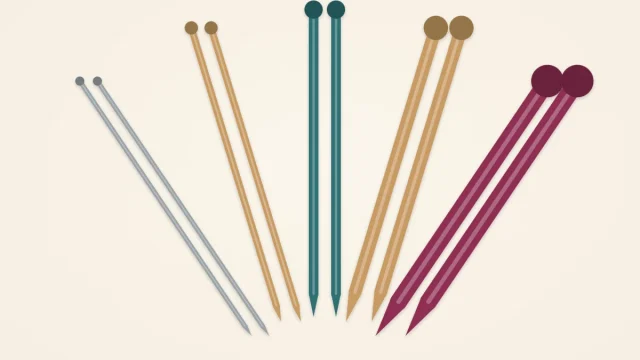
If you want one recommendation and no further reading, choose a smooth, plied, worsted-weight (#4) yarn in a light or medium solid color, in either wool, superwash wool or a soft acrylic. Pair it with US 8 (5 mm) needles and garter stitch. That combination is thick enough to grow at a satisfying pace, thin enough to drape around a neck, and smooth enough that every stitch is easy to read.
The rest of this guide explains why, and what changes when you pick something else.
Fiber: what each one does in a scarf
Fiber controls warmth, stretch, weight and care. No fiber is best at everything, so match it to the person who will wear the scarf and to how it will be washed.
| Fiber | Strengths in a scarf | Trade-offs |
|---|---|---|
| Wool (not superwash) | Warm, springy, forgiving of uneven tension, blocks very well | Hand wash only, or it can felt; some wools feel prickly on the neck |
| Superwash wool | Machine washable, smooth, usually soft, takes color well | Less springy; tends to relax and grow longer when wet |
| Acrylic | Inexpensive, machine washable, widely available, no animal fiber | Less breathable; does not hold a wet block and must never be ironed |
| Alpaca | Very warm, silky, drapes beautifully | Almost no elasticity, so it stretches lengthwise; fuzzy halo softens stitch patterns |
| Cotton | Cool, smooth, good for mild weather and for people who avoid wool | Heavy and inelastic; shows every uneven stitch; tiring on the hands |
| Blends | Combine traits, such as wool for bounce plus acrylic or nylon for easy care | Care follows the most delicate fiber in the mix, so read the label |
For a beginner, elasticity matters more than it sounds. A springy yarn such as wool stretches slightly as you work each stitch and then recovers, which hides small differences in tension. Cotton and alpaca do not give, so they are easier once your hands have settled into an even rhythm. If warmth is the main goal, the winter scarf planning guide compares insulating fibers in more detail.
Yarn weight: how thick the strand is
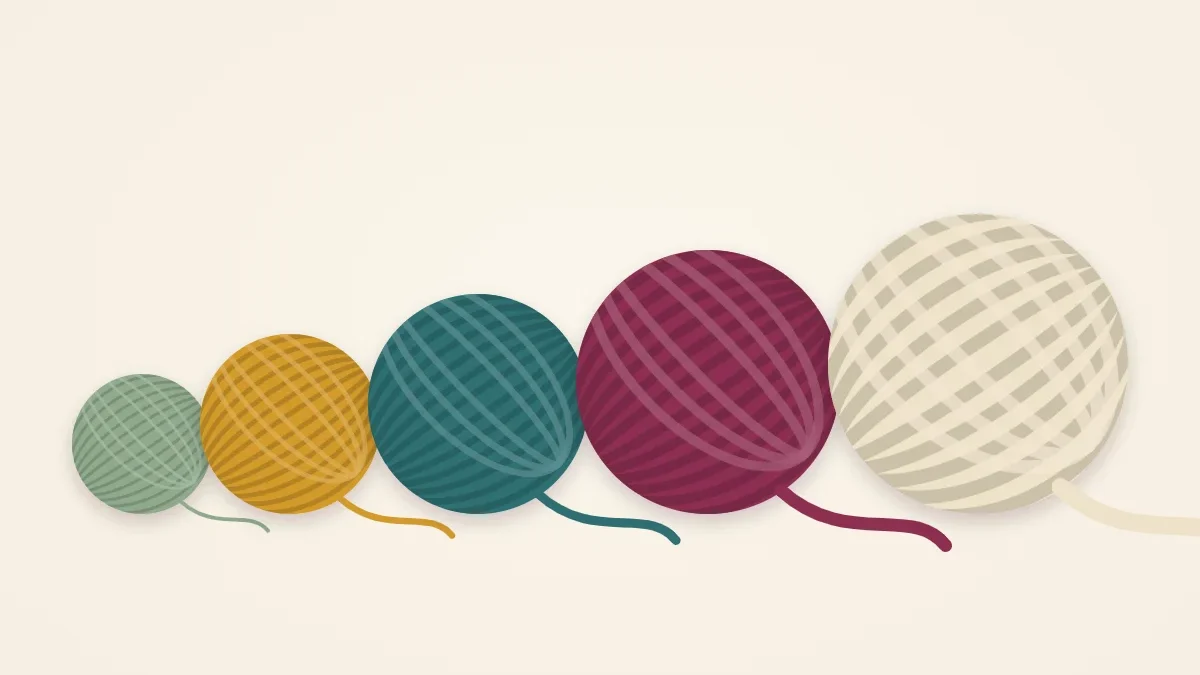
Yarn weight means thickness, not how heavy the ball is. In the United States it is described with the Craft Yarn Council numbering system, which you will find printed on most labels as a number inside a small yarn-ball symbol.
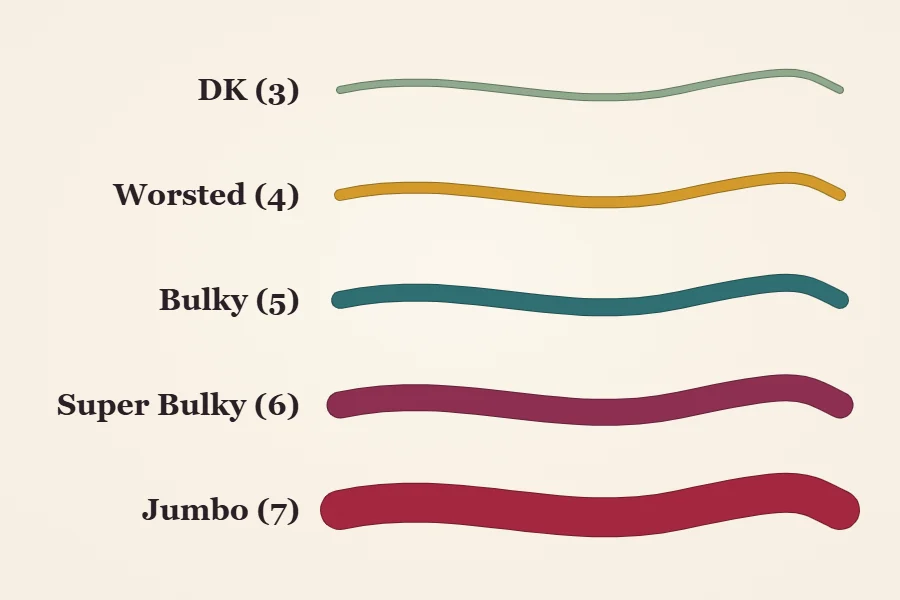
- DK (#3): light and drapey, good for spring and fall scarves. More stitches and more rows, so it takes longer.
- Worsted (#4): the all-purpose middle. Warm without bulk, and the easiest weight for learning.
- Bulky (#5): noticeably thicker and quicker, with a cozy, substantial fabric.
- Super bulky (#6): very fast, very warm, and heavy around the neck in longer lengths.
- Jumbo (#7): statement scarves on very large needles; stitches are huge and the fabric is thick.
Thicker yarn needs fewer yards for the same scarf, but it usually costs more per yard and comes in shorter skeins, so the totals often come out closer than you expect. The yardage guide gives typical ranges by weight. If you are leaning toward the thick end, read the guide to bulky, super bulky and jumbo yarns first, because the way a thick strand is constructed changes how it wears.
Softness against the neck
The skin on your neck is far more sensitive than the skin on your hands, so a yarn that feels fine in your fingers can still itch when worn. Test it where it will be worn: hold the ball against the side of your neck or under your chin for about half a minute. If it prickles in the store, it will prickle in the scarf.
Finer fibers bend more easily against the skin and feel softer. That is why fine wools such as merino are comfortable for most people, while coarser, more rustic wools suit outerwear better than neckwear. Washing softens many wools a little, but it will not turn a scratchy yarn into a soft one.
Watch out
If you are knitting a gift and do not know whether the recipient is sensitive to wool or other animal fibers, a soft acrylic or a cotton blend is the safer choice.
Washability: be honest about care
Scarves pick up makeup, sunscreen, food and whatever is on a coat collar. Check the care symbols on the label before you buy and choose the level of care that will really happen.
- Machine washable: acrylic, superwash wool and most cotton. Best for children, gifts and everyday scarves.
- Hand wash, dry flat: non-superwash wool, alpaca and most luxury blends. Hot water plus agitation can felt them permanently.
Care also affects finishing. Wool and other animal fibers respond well to wet blocking, which evens out stitches and straightens edges. Acrylic does not hold a wet block and should never be pressed with an iron; hovering steam, used carefully, is the only heat it tolerates. The details are in the guide to blocking a knitted scarf.
Color and how it shows your stitches
Color is not only a matter of taste. It decides how well you can see your work and how much of a stitch pattern survives in the finished scarf.
- Light and medium solids show every stitch clearly. They are the easiest to learn on and the best choice for ribs, seed stitch and basketweave.
- Very dark colors such as black and navy hide the stitches, especially in the evening. Save them for later projects.
- Heathers and tweeds are forgiving of small irregularities while still showing texture.
- Variegated and self-striping yarns look lively in plain garter stitch but blur textured patterns. Let the yarn or the stitch do the talking, not both.
Texture works the same way. Fuzzy, boucle, eyelash and very loosely spun yarns make it hard to find individual stitches and nearly impossible to fix a mistake. A smooth strand with several plies twisted together gives the clearest stitches and splits less on the needle tip.
Reading the label before you buy
The paper band answers most questions in a few seconds. Look for:
- The weight number (#3 to #7) and the fiber content.
- The yardage per skein, which matters more than the weight in ounces or grams when you are working out how many skeins to buy.
- The suggested needle size. For a scarf, going up one or two sizes from the label gives a softer, drapier fabric; the needle size guide explains when to do that.
- The care symbols.
- The dye lot number. Buy all the skeins for one scarf from the same lot so the color matches.
Tip
Undecided between two yarns? Pick the smoother, lighter-colored one for the scarf you are learning on, and keep the other for your second project.
Frequently asked questions
Is acrylic yarn good enough for a scarf?
Yes. A soft acrylic is inexpensive, machine washable and comfortable for most people, which makes it a sensible choice for first scarves, children and gifts. It does not hold a wet block, and it must never be ironed.
What yarn weight is easiest for a beginner scarf?
Worsted weight (#4) is the easiest starting point. The stitches are large enough to see clearly on US 8 (5 mm) needles, and the fabric is warm without being heavy.
How can I tell if a yarn will be itchy?
Hold the ball against the side of your neck or under your chin for about half a minute. Your neck is more sensitive than your hands, so if the yarn prickles there, it will prickle as a scarf.